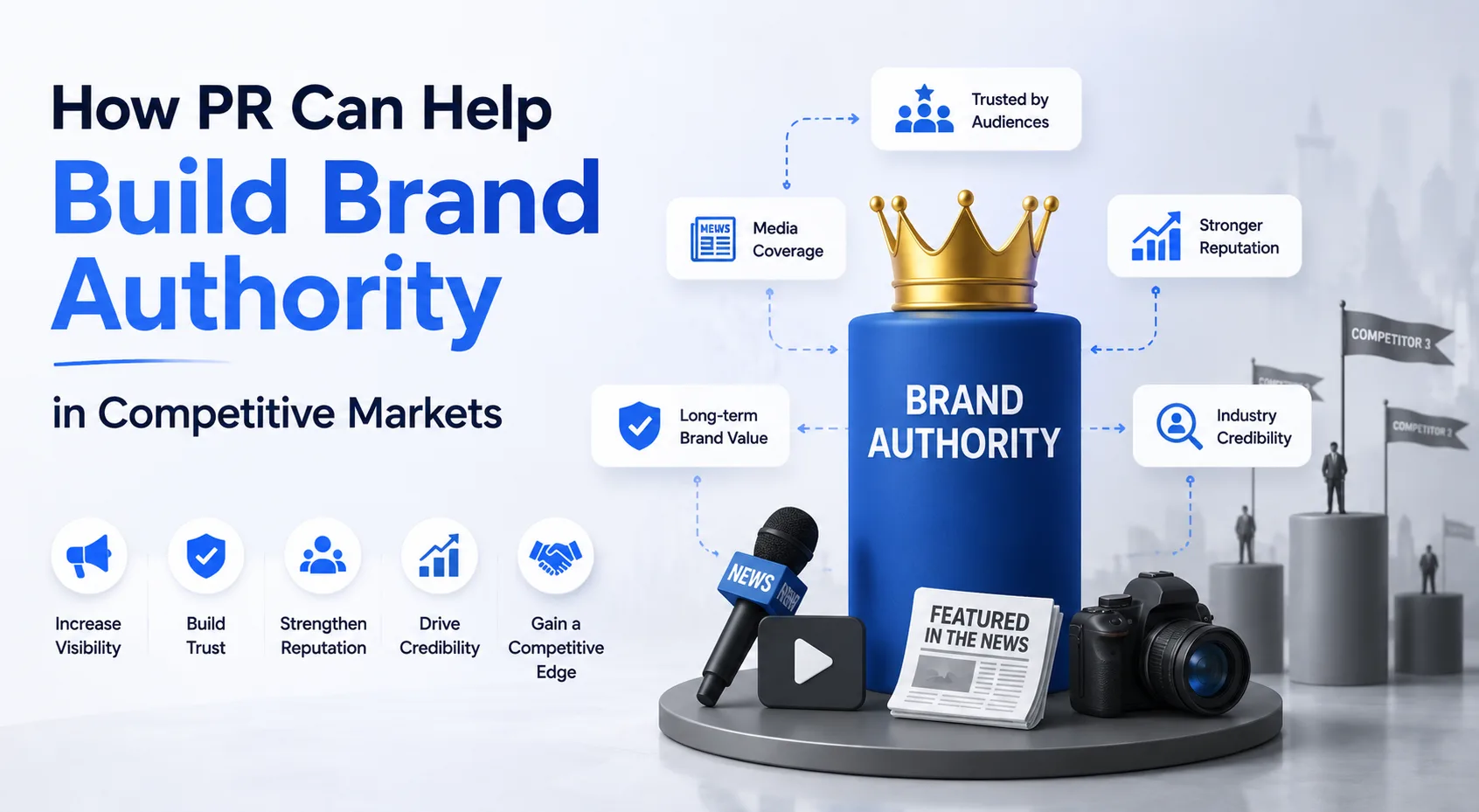
How PR Can Help Build Brand Authority in Competitive Markets
Two businesses can look equally capable on paper. What separates them is what the buyer already believed before the meeting started — and that belief is built by PR, not advertising.
What You'll Learn
- The Gap Between Being Good and Being Chosen
- Why Earned Authority Works Differently
- What PR Produces That Advertising Cannot
- How Authority Reduces Sales Friction Over Time
- What PR Looks Like for a Business That Isn't a Household Name
- The Measurement Reality
- Authority Is a Competitive Asset That Compounds
- Frequently Asked Questions
1. The Gap Between Being Good and Being Chosen
Two businesses competing for the same client. Both have relevant experience. Both can provide references. Both present credibly in a meeting. The buyer cannot meaningfully distinguish between them on capability alone, and they know it. What they fall back on is harder to articulate: which one feels more established, more recognized, more like the kind of business that gets chosen by people like them.
That feeling has a source — an article read in a respected publication, a name recognized from an industry event, a mention from someone whose opinion they trust. None of it was part of a formal sales process. All of it shaped the outcome of one.
Why Brand Authority Matters More Than Ever
Key statistics behind the shift from paid visibility to earned trust
Sources: Nielsen; 2024 Edelman-LinkedIn B2B Thought Leadership Impact Report; Sword and the Script (2024)
In markets where capability parity is increasingly common, being genuinely good at what a business does becomes the entry requirement rather than the differentiator. PR is the discipline that builds the verification infrastructure buyers rely on before they ever take the meeting.
2. Why Earned Authority Works Differently
Every business says credible things about itself. Buyers know this and discount it accordingly — marketing materials, case studies, and website copy were all written by people with a direct financial interest in the conclusion.
What carries different weight is what sources the buyer already trusts say about the business independently. Nielsen research finds that 92% of consumers trust earned media more than any other form of advertising — not because the words are more eloquent, but because the endorsing party had no financial incentive to say them.
3. What PR Produces That Advertising Cannot
Advertising produces visibility — a business can buy its way into a target audience's attention consistently and at scale. What it cannot buy is the credibility signal that comes from an independent source deciding the business is worth covering.
Buyers in competitive markets are trust-limited, not attention-limited. The 2024 Edelman-LinkedIn B2B Thought Leadership Impact Report, surveying nearly 3,500 management-level professionals across seven countries, found that 73% of B2B buyers consider thought leadership more trustworthy than traditional marketing materials for judging a company's competencies.
| What It Answers | Advertising | PR |
|---|---|---|
| Reach | Efficient, scalable | Limited by earned coverage |
| Control over message | Full control | No control — that's the point |
| Buyer's trust response | Discounted as advocacy | Treated as independent evidence |
| Best for | Awareness, immediate demand capture | Credibility, long-term positioning |
This isn't an argument against advertising — it's an argument for understanding which problem each investment is suited to solve. A business spending its entire marketing budget trying to buy trust through paid channels is attempting something those channels were not designed to deliver.
4. How Authority Reduces Sales Friction Over Time
A prospect who has read a company's thinking in a respected publication, or heard its perspective referenced in a trusted conversation, arrives at the first commercial conversation already partway through the trust-building process. The friction this removes is real and cumulative:
- Shorter first conversations — credibility doesn't need to be established from scratch.
- Fewer objections about track record — it's already been evidenced by sources the buyer encountered independently.
- Faster progression from contact to proposal — the psychological distance between stranger and trusted advisor is smaller.
- Pricing power — 60% of global B2B decision-makers say they're willing to pay a premium to work with organizations that provide valuable thought leadership (Edelman-LinkedIn, 2024).
Authority earned through consistent PR activity changes what the market is willing to pay, not just how quickly it decides.
5. What PR Looks Like for a Business That Isn't a Household Name
The version of PR most businesses imagine involves national press campaigns and agency retainers. That version exists — it's also not what builds authority for most B2B businesses in competitive markets.
Authority at the scale most businesses need is built within a much more specific community — an industry vertical, a professional buyer segment, a geographic market like Karachi, Lahore, or Islamabad. At that scale, PR looks like:
- Contributing specific, substantive analysis to publications the target buyer actually reads
- Speaking at events the target buyer attends
- Being cited as a credible source in conversations the target buyer is already having
- Building relationships with voices in the space whose endorsement carries commercial weight
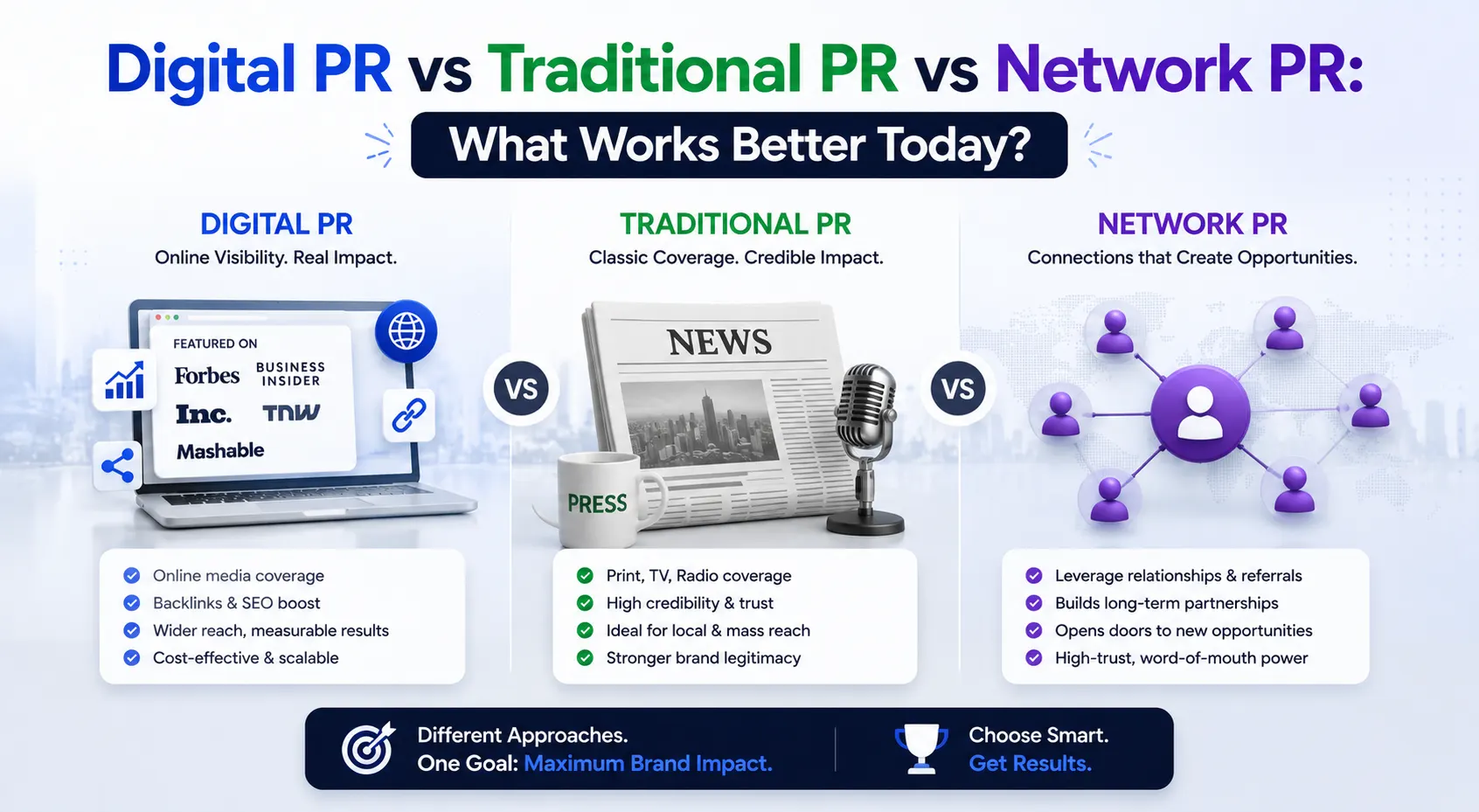
None of this requires a large budget or a dedicated communications team — it requires a clear understanding of where the target buyer forms their opinions, and a consistent effort to be present and credible there. Understanding how digital and traditional PR approaches differ is the next layer of that decision.
6. The Measurement Reality
PR's contribution to brand authority is real and commercially significant. It's also genuinely difficult to attribute to specific outcomes with the directness that paid advertising allows. The measurement that is available is meaningful even when it isn't clean:
- Share of voice in industry coverage relative to competitors
- Growth in branded search volume over time as recognition builds
- Referral traffic from earned placements
- What prospects say when asked how they first became aware of the business
7. Authority Is a Competitive Asset That Compounds
The businesses easiest to displace are the ones whose market position rests on capability and price alone — both are matchable by a well-resourced competitor. The businesses hardest to displace are the ones whose authority is embedded in the community they serve: the names being cited, the voices being invited to speak, the perspectives being referenced in conversations they weren't even part of.
In a market where 73% of marketers expect intensifying competition, the businesses that arrive at the first conversation already trusted have a structural advantage that cannot be replicated quickly. For businesses trying to build that presence, earned visibility, thought leadership, and influence built around a clear understanding of where authority actually lives in a market produce a fundamentally different competitive position than visibility alone.
Ready to Build Real Brand Authority?
Get a free consultation on where your target buyers actually form their opinions — and how to earn credibility there.
Book Your Free Consultation →Frequently Asked Questions
We help businesses across Pakistan build earned brand authority through PR, thought leadership, and influence campaigns. Explore our PR & influence marketing services.