Posting Regularly Doesn’t Automatically Create Results
A lot of businesses stay active on social media for months without seeing anything meaningful happen. Posts go out consistently, designs look polished, captions get written, yet the actual business impact stays difficult to measure.
The frustrating part is that the activity creates the impression that progress is happening.
A post receives likes. A reel reaches a few thousand views. Comments appear occasionally. But when someone checks inquiries, leads, or conversions, the gap becomes obvious. The attention exists, but it rarely moves anywhere.
That’s usually when people start questioning why their social media is not generating leads despite staying consistent.
In many cases, the problem is not effort. It’s direction.
Content gets published because the schedule says something needs to go live. One week focuses on promotions, another follows trends, then the next shifts into motivational posts that have little connection to the business itself. Over time, the messaging starts feeling scattered.
Low engagement on social media often begins there. Not because the algorithm is broken, but because the audience never receives a clear reason to care consistently.
A lot of social media content not working comes down to this disconnect between activity and intent. Posting regularly can maintain visibility for a while, but visibility alone does not create movement.
A Social Media Strategy Is Really a Decision Framework
A lot of people treat strategy like a posting schedule. Three posts per week, a few trending hashtags, maybe a content calendar shared across the team.
That’s not really a strategy. It’s just publishing activity organized neatly.
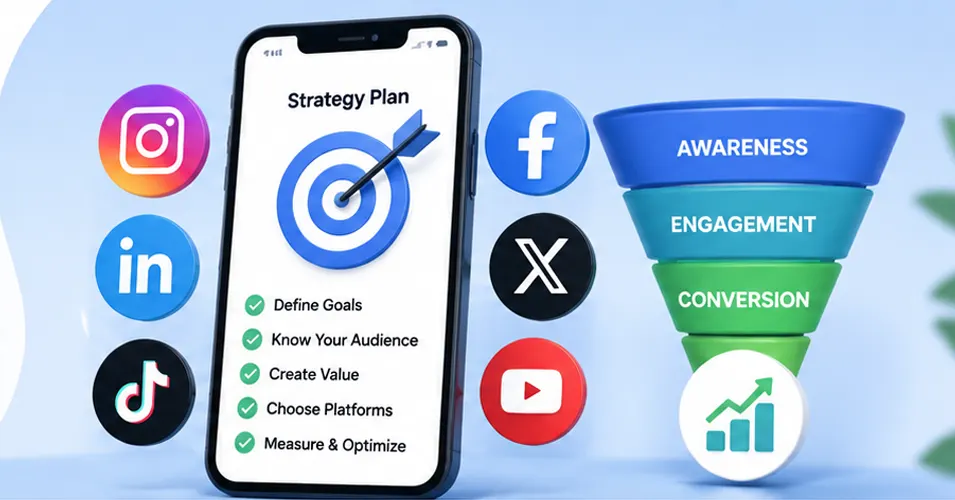
A real social media strategy helps decide:
- what gets posted
- who the content is trying to reach
- what action should follow
- why one platform matters more than another
Without those decisions, content usually becomes reactive. Posts follow trends, competitors, or whatever feels relevant that week. The account stays active, but the direction keeps shifting.
Audience behavior changes everything here.
The way people use LinkedIn is different from how they scroll through Instagram or TikTok. Someone browsing during a lunch break responds differently than someone actively researching a service or comparing options. Good content direction starts by understanding those differences instead of treating every platform the same way.
Goals shape the strategy too.
A business trying to generate consultations will approach content differently than a brand focused on awareness or community engagement. One may need educational content and trust-building. Another may rely more on product visibility and faster interaction.
That’s why creating a social media strategy for business usually starts with clearer decisions, not more content.
Posting frequency alone changes very little if the messaging, audience targeting, and platform usage remain inconsistent.
Start With Audience Behavior, Not Platform Trends
A trend performing well online does not automatically mean it will work for your business.
A restaurant, a SaaS company, and a law firm can all post the same trending format and get completely different outcomes because the audience expectations behind each one are different.
That difference matters more than most content calendars acknowledge.
People use platforms with different intentions already in mind. Someone scrolling through Instagram late at night behaves differently from someone browsing LinkedIn during work hours. The type of attention, patience, and decision-making behind those sessions changes the way content gets processed.
Good audience targeting on social media starts there.
A business owner researching service providers usually looks for clarity, proof, and credibility. Someone casually browsing entertainment content responds to speed, novelty, and emotion much faster. Treating both audiences the same usually weakens engagement quality instead of improving it.
The buyer journey affects content expectations too.
A person discovering your brand for the first time may respond to educational or awareness-focused content. Someone closer to making a decision often looks for specifics, comparisons, pricing clarity, or real outcomes.
Trend-based content often interrupts that flow.
It may increase reach temporarily, but the audience arriving from trend-driven posts is not always aligned with the business itself. Attention grows, yet conversions stay weak because the content attracted curiosity rather than intent.
That’s why audience behavior usually matters more than platform momentum. Strong social strategies pay closer attention to how people make decisions than to what the algorithm rewarded last week.
Content Without Direction Usually Creates Noise
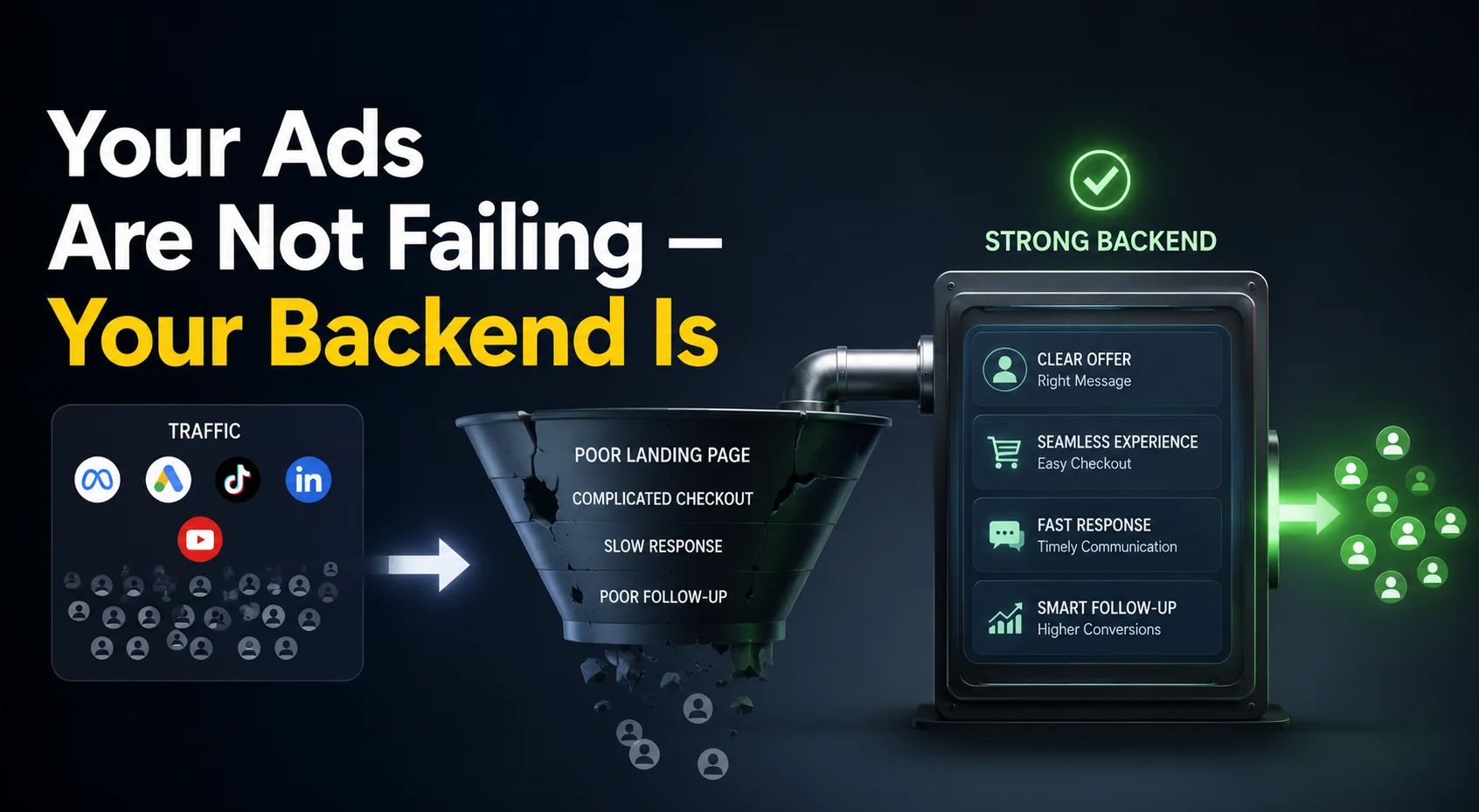
A lot of business accounts do not actually suffer from a lack of content. They suffer from disconnected content.
One post talks about industry tips. The next jumps into a trending meme. A few days later, the account pushes a sales offer with no real transition between them. The audience keeps seeing activity, but the messaging never settles into something recognizable.
Over time, that inconsistency affects trust more than people expect.
Strong content consistency does not mean repeating the same format endlessly. It means the audience understands what the brand talks about, what kind of value to expect, and why the content deserves attention in the first place.
Random posting usually weakens that relationship.
A few patterns show up often:
- educational posts with no connection to the actual service
- promotional content appearing too aggressively after long inactivity
- trend-based posts attracting the wrong audience
- content topics shifting constantly without a clear focus
A good social media content strategy creates movement intentionally. Some posts build awareness. Others create trust, answer objections, or guide people toward a specific action.
Without that structure, engagement becomes harder to convert into anything meaningful.
A person may enjoy a post and still have no idea:
- what the business offers
- who the service is for
- why they should take the next step
That gap becomes much easier to notice when content is planned around buyer expectations instead of isolated post ideas. Businesses trying to improve social media content planning often see stronger results once the messaging starts aligning more closely with buyer intent instead of chasing attention alone.
Converting social media traffic usually depends less on volume and more on whether the content leads people somewhere intentionally.
Engagement Alone Is a Weak Goal
A post can perform well publicly and still contribute very little to the business itself.
High reach looks impressive in reports. Likes create the feeling that people are responding. Shares and comments add momentum. But none of those metrics automatically mean the audience is moving closer to a decision.
That difference gets overlooked constantly.
A video attracting broad entertainment engagement may generate thousands of views from people who were never realistic customers to begin with. Meanwhile, a smaller post with lower reach might quietly bring qualified inquiries because the message reached the right audience at the right stage.
Engagement quality matters more than raw numbers.
A business selling professional services usually benefits more from:
- meaningful conversations
- profile visits from relevant users
- consultation inquiries
- clicks from decision-oriented audiences
than from viral attention disconnected from actual buying intent.
The call-to-action matters here too.
Some content should educate. Some should build familiarity. Other posts need to guide people toward a clearer next step. Without that movement, audiences consume content passively and leave without doing anything meaningful afterward.
Different content supports different parts of the conversion funnel.
A short awareness-focused post may introduce the brand. A detailed carousel might build trust. A case study or testimonial can reduce hesitation closer to the decision stage.
Strong social media lead generation usually happens when those stages connect naturally instead of operating independently.
That’s why engagement alone is often a weak benchmark. Attention has value, but only when the strategy gives people somewhere intentional to go next.
The Strongest Strategies Stay Consistent Without Feeling Repetitive
People usually recognize strong brands long before they remember specific posts.
The tone feels familiar. The messaging stays steady. Even when the format changes, the account still sounds like the same business speaking with the same priorities behind it.
That kind of consistency builds gradually.
A lot of businesses misunderstand consistency as frequency alone. Posting every day may increase activity, but repetitive content quickly loses attention when every post starts sounding interchangeable. Audiences stop noticing content that feels predictable without adding anything new.
The opposite extreme creates problems too. Some accounts shift direction constantly in an attempt to stay interesting. Educational content disappears for weeks, promotional messaging becomes inconsistent, and the overall identity starts feeling unstable.
Strong brand positioning usually sits somewhere in between.
The content evolves, but the underlying direction remains recognizable. Topics connect logically. The messaging reflects the same audience priorities over time. Even different campaigns still feel tied to a broader purpose instead of acting like isolated marketing experiments.
That coherence matters more in long-term social growth than occasional spikes in engagement.
People rarely make decisions after one post. Familiarity builds through repeated exposure, clearer positioning, and steady reinforcement of what the business actually represents. Meaningful engagement tends to grow when audiences know what to expect without feeling like they are seeing the exact same thing repeatedly.
A strong social media marketing strategy creates enough consistency to build recognition while leaving enough variation to keep attention active.
Social Media Works Better When the Strategy Matches the Business
Once a business understands what it wants social media to accomplish, the content decisions usually become easier.
The account stops trying to do everything at once. Posts become more focused. Certain topics start performing consistently while others quietly disappear because they were attracting attention without bringing the right audience.
That kind of clarity changes execution more than people expect.
Teams spend less time guessing what to post next. The messaging becomes easier to maintain across platforms. Even simple things like captions, offers, and calls-to-action start feeling more natural because the business already knows who it is speaking to and why.
Social media also becomes easier to evaluate realistically.
Instead of chasing every spike in reach, businesses begin paying closer attention to:
- which content brings qualified inquiries
- what type of posts generate conversations
- where audiences lose interest
- which platforms actually support business goals
Those patterns are much more useful long term than isolated engagement numbers.
That’s often where experienced social media marketing services can help. Not by adding more noise to the schedule, but by helping businesses build a strategy that is easier to manage, easier to measure, and more connected to real business outcomes.
Integrate EasyPaisa in WooCommerce Today
Contact us now and let's embark on the journey to online success together!