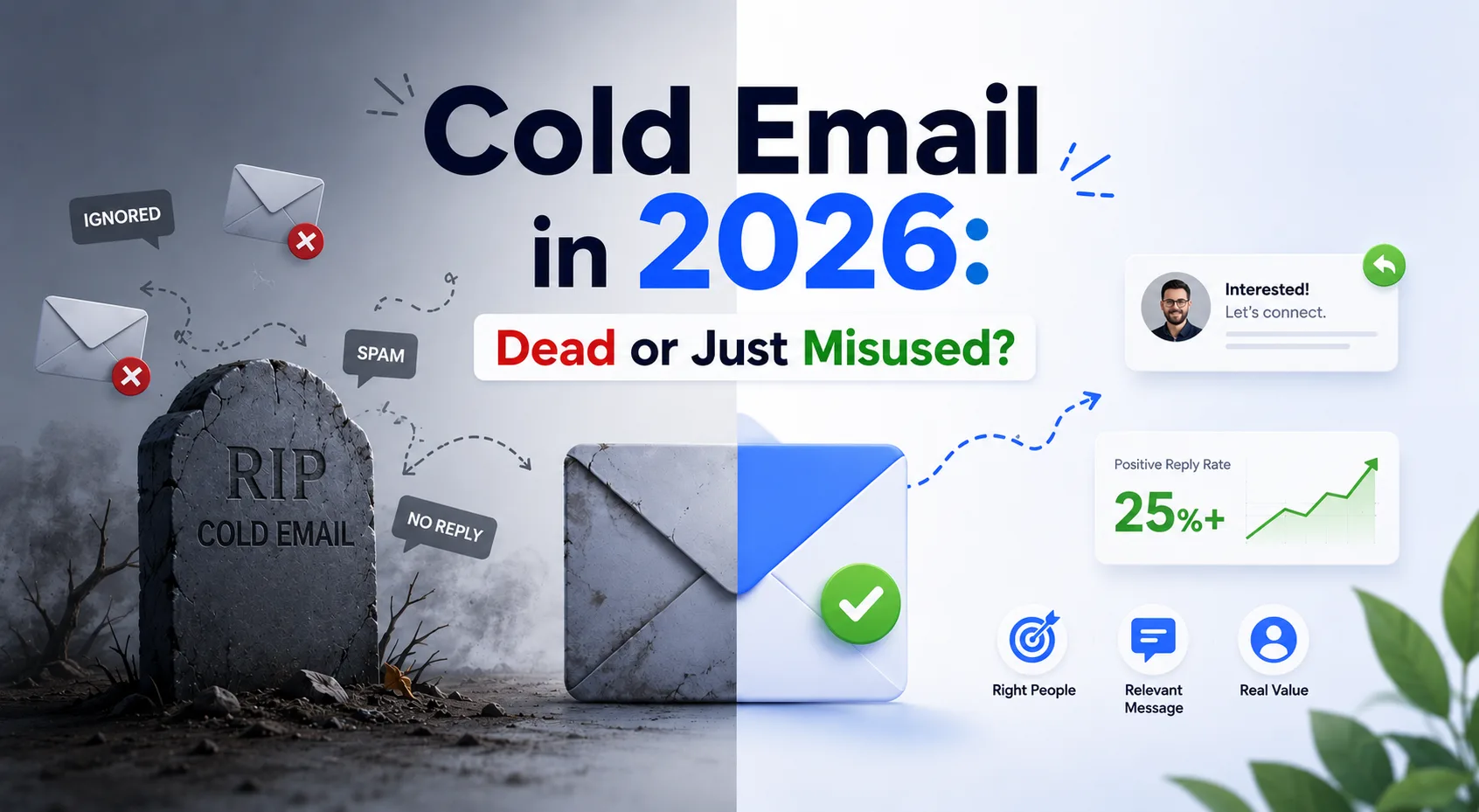
Cold Email in 2026:
Dead… or Just Misused?
Everyone says cold email doesn't work anymore. They're wrong. Bad cold email is dead. Strategic cold email is very much alive — and here's the proof.
"Cold email doesn't work anymore."
— Said by SME owners, startup founders, and marketing managers across Pakistan every week in 2026Their reasoning sounds logical: inbox algorithms are stricter, spam filters are smarter, people are overwhelmed with outreach, and open rates are declining. So the conclusion becomes easy — cold email is dead.
But here's the more accurate statement:
Bad cold email is dead. Strategic cold email — built on infrastructure, targeting precision, and behavioural psychology — is very much alive. The real problem isn't the channel. It's how it's being used.
Why People Think Cold Email Is Dead
Most businesses have tried cold email at least once. Their experience follows a familiar pattern — and it almost always ends the same way.
In 2026, cold email is no longer about volume. It's about precision, infrastructure, and sequencing. The businesses that understand this are quietly building predictable B2B pipelines. The ones who don't are telling everyone cold email is dead.
5 Reasons Most Cold Email Campaigns Fail

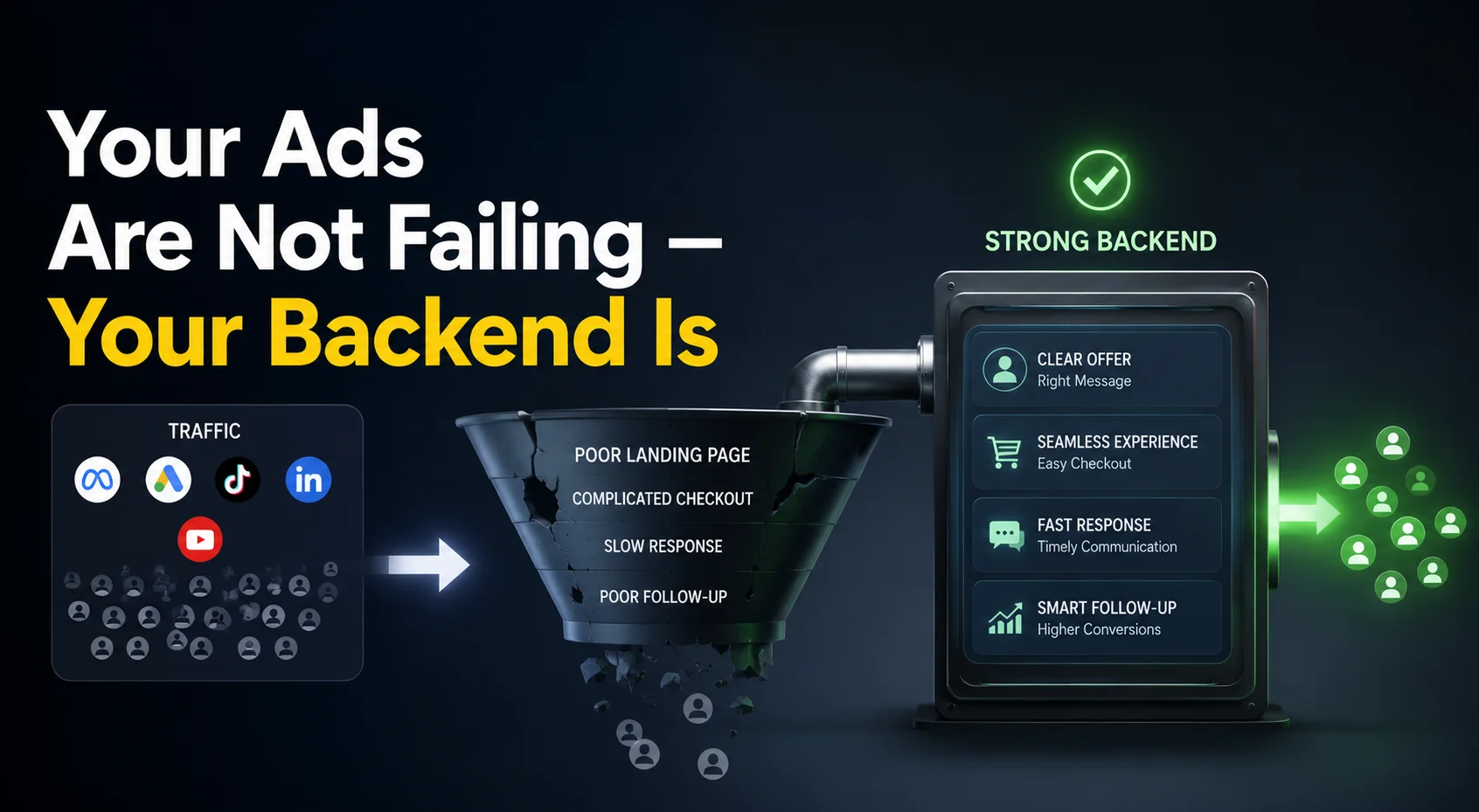
Figure 1: The 5 core failure points in cold email campaigns — which one is hurting your outreach?
Poor Targeting — Spray-and-Pray Outreach
Many campaigns are built on broad, poorly filtered data: "All e-commerce businesses in Pakistan", "All CEOs in Karachi", "All Shopify stores." This isn't targeting — it's guessing. Cold email works when the offer matches the recipient's stage of growth, the pain point is specific and relevant, and the messaging reflects genuine industry awareness. In 2026, hyper-segmentation outperforms scale every time. If your ICP (Ideal Customer Profile) is vague, your results will be vague.
Weak Infrastructure — No Domain Warming, No Separation
Deliverability is the invisible backbone of cold email. Yet most businesses send from their primary domain, don't warm new domains, ignore SPF/DKIM/DMARC setup, and blast large volumes immediately. The result? Poor inbox placement — and when emails land in spam, performance metrics become meaningless. Professional cold outreach requires dedicated sending domains, gradual warming schedules, volume control, proper authentication, and technical monitoring. Without infrastructure, even great copy fails.
Generic Copy That Sounds Like Everyone Else
Most cold emails look like this: "Hi, we help businesses grow. Can we schedule a quick call?" No context. No specificity. No evidence of research. No positioning. In 2026, inbox fatigue is real — decision-makers can detect templated outreach instantly. Effective cold email references specific industry signals, speaks to one clear pain point, stays concise and non-pushy, and prioritises conversation over pitching. Cold email is not about convincing in one message. It's about starting relevant dialogue.
Bad or Unverified Data
This is where many campaigns quietly collapse. Unverified lists lead to high bounce rates, damaged sender reputation, and blacklisting risks. And once domain reputation drops, recovery is slow and expensive. Data hygiene is no longer optional. Cold email systems in 2026 must include email verification before every send, bounce suppression, regular database cleaning, and ongoing enrichment. Without clean data, your infrastructure suffers regardless of how well it was set up.
No Follow-Up Architecture
Many businesses send one email. Maybe two. Then stop. But statistically, a large percentage of replies come after the third or fourth touchpoint — not because prospects were uninterested, but because they were busy, missed it, or forgot. A proper system includes 3–5 follow-ups, value reinforcement, soft reminders, and objection-handling angles. Cold email success is often a function of persistence — not pressure. Structured follow-up sequences are not optional; they are essential.
Every one of these 5 failures is a systems problem — not a channel problem. Cold email didn't fail your business. The architecture behind your campaign did.
Real-World Comparison: Wrong Way vs Right Way
Let's compare two businesses targeting Pakistani SMEs with cold email. Same market, same time period, completely different results.

Figure 2: Startup A (volume-first) vs Startup B (system-first) — same market, completely different outcomes
| Factor | Startup A — Volume First | Startup B — System First |
|---|---|---|
| List size | 8,000 scraped emails | 1,200 hyper-segmented prospects |
| Data quality | Unverified, broad | Verified, enriched, filtered |
| Sending domain | Main company domain | Dedicated sending domain |
| Warming | None — cold blast | 4-week gradual warm-up |
| Authentication | Not configured | SPF + DKIM + DMARC set up |
| Copy approach | Generic one-size-fits-all pitch | Personalised, industry-aware |
| Follow-up | 1–2 emails then stop | 4-step structured sequence |
| Result | Domain flagged, near-zero replies | Consistent replies, pipeline growth |
Startup B used a smaller list and got better results. Cold email didn't fail Startup A. Execution did. The difference between these two outcomes is entirely in the system design — not the channel.
Practical Improvements You Can Apply Immediately
If you're currently running or planning cold outreach, run through this checklist before your next send. Each item here addresses one of the 5 failure modes above.

Figure 3: Cold email launch checklist — complete every item before sending a single email
- Define a narrow ICP — Industry + company size + growth stage. The more specific your ideal customer profile, the higher your reply rate. "E-commerce businesses in Pakistan with 10–50 employees selling fashion" beats "all online stores".
- Separate cold outreach from your main domain — Register a secondary domain (e.g. boundles-outreach.com) specifically for cold email. Never risk your primary domain reputation on cold outreach.
- Warm the new domain gradually — Start with 20 emails/day and scale by 20 each week over 4 weeks. Use tools like Lemwarm or Mailreach for automated warming. A warmed domain dramatically improves inbox placement.
- Verify every list before sending — Use Hunter.io, ZeroBounce, or NeverBounce to clean your list. Target under 3% bounce rate. Every unverified email you send risks your domain reputation.
- Write copy that focuses on relevance, not features — Reference a specific industry challenge, company signal, or recent event. One sentence of genuine research beats five sentences of product promotion.
- Build a minimum 3-step follow-up sequence — Space follow-ups 3–5 days apart. Each email should add new value or a new angle — not just "just following up". Touch 3 and 4 are where most replies come from.
- Monitor reply quality, not just open rates — A 40% open rate with zero replies means your copy is failing. A 15% open rate with 8% reply rate means your targeting and copy are working. Optimise for conversations, not vanity metrics.
- Set up SPF, DKIM, and DMARC on every sending domain — These are non-negotiable technical requirements. Without them, Gmail and Outlook increasingly route cold emails directly to spam regardless of content quality.
For B2B cold email targeting Pakistani businesses, WhatsApp follow-up after email touch 2 dramatically improves response rates. Pakistani decision-makers are highly active on WhatsApp for business communication. A brief, professional WhatsApp message referencing your email can increase overall campaign reply rates by 35–50%.

Figure 4: Cold email in 2026 — the numbers that matter for building a successful outreach system
So… Is Cold Email Dead?
No.
But lazy cold email is. Volume-first thinking is outdated. The inbox is more competitive than it has ever been — and that means the gap between campaigns built on strategy and campaigns built on shortcuts has never been wider.
Modern cold email in 2026 is:
- Data-driven — ICP-precise lists, verified emails, enriched with relevant signals
- Infrastructure-focused — Dedicated domains, proper authentication, controlled volume
- Targeted — Hyper-segmented outreach that speaks directly to one specific pain
- Measured — Reply rate and conversation quality, not open rates and volume
- Systematic — Multi-touch sequences, not single blasts
For SMEs and growing businesses in Pakistan, cold email can still be one of the most cost-efficient ways to open B2B conversations — when done properly. The difference between "spam" and "strategy" is almost always system design.
In 2026, cold email isn't about sending more. It's about sending smarter. If you're unsure whether your current cold outreach setup is structurally sound — targeting, infrastructure, sequencing — it's worth stepping back and evaluating the architecture behind it. Small structural adjustments often create disproportionately better results.
Want to Build a Cold Email System That Actually Works?
Boundless Technologies helps Pakistani businesses set up strategic cold email infrastructure — from domain warming and data sourcing to copywriting and sequence automation.
Get a Free Cold Email Audit → Free consultation · Response within 2 business hours · No commitment